
Innovation
Tuesday, June 11, 2024
Why use professional web design for small businesses? Learn how expert sites drive credibility, sales, search rankings, and user engagement.

Why Use Professional Web Design: Small Business Impact
Many small business owners feel frustrated when their website fails to attract customers or reflect the true quality of their shop or service. In today’s competitive market across the United Kingdom, a professional web design is more than a luxury—it is your digital handshake with every potential client. This guide highlights how modern web design shapes customer engagement and outlines what distinguishes a successful, affordable solution perfectly matched to small retail or service businesses.
Table of Contents
What Defines Professional Web Design Today
Types Of Professional Web Design Solutions
Key Features Driving Customer Engagement
How Effective Design Boosts SEO And Trust
Risks And Costs Of Poor Website Design
Comparing DIY And Professional Approaches
Key Takeaways
Point | Details |
|---|---|
Modern web design focuses on user experience | It integrates functionality, accessibility, and aesthetics to create engaging digital experiences that align with user expectations. |
Choosing the right design solution is critical | Small businesses should consider Responsive, Adaptive, or Custom Web Design based on their target audience and budget to enhance engagement and brand representation. |
Effective design impacts SEO and credibility | Key factors such as mobile responsiveness, loading speed, and intuitive navigation not only boost user experience but also improve search engine rankings. |
Professional design provides long-term value | Investing in professional web design yields greater returns through improved functionality and user engagement, overshadowing initial DIY cost savings. |
What Defines Professional Web Design Today
Professional web design has evolved far beyond simple visual aesthetics, transforming into a sophisticated discipline that blends strategic functionality with user-centred experiences. Modern web design represents a comprehensive approach that prioritises user interaction, accessibility, and strategic business outcomes. Critical design principles now consider how visual elements directly influence user perceptions and engagement.
At its core, professional web design integrates several key components that distinguish it from amateur efforts. These include responsive layouts that adapt seamlessly across devices, intuitive navigation structures, rapid loading speeds, and visually compelling graphics that communicate a brand’s core identity. Professional designers understand that a website is not merely a digital brochure but a dynamic platform for customer interaction and conversion. The goal is creating digital experiences that feel effortless, engaging, and aligned with user expectations.
The most effective professional web designs incorporate strategic elements that go beyond surface-level aesthetics. These include clear information architecture, strategic colour psychology, thoughtful typography, and intentional user experience (UX) mapping. Website design success hinges on creating an environment that provides clear, accurate information while maintaining visual appeal that captures and retains user attention. By balancing technical functionality with aesthetic refinement, professional web design transforms websites from static pages into powerful business tools.
Pro tip: Invest in a professional web design audit that evaluates your current website against modern usability and performance standards to identify immediate improvement opportunities.
Types of Professional Web Design Solutions
Professional web design encompasses multiple sophisticated approaches tailored to meet diverse business needs. Small businesses can choose from several strategic design solutions that address specific digital objectives. Web design approaches range from adaptive techniques to responsive frameworks, each offering unique advantages for digital presence and user engagement.
The primary types of professional web design solutions include Responsive Web Design (RWD), Adaptive Web Design (AWD), and Custom Web Design. Responsive web design creates fluid layouts that automatically adjust to different screen sizes, ensuring consistent user experience across smartphones, tablets, and desktop computers. Adaptive web design, by contrast, generates distinct layouts for specific device types, providing more tailored experiences. Custom web design represents a bespoke approach where every visual and functional element is meticulously crafted to reflect a business’s unique brand identity and strategic goals.
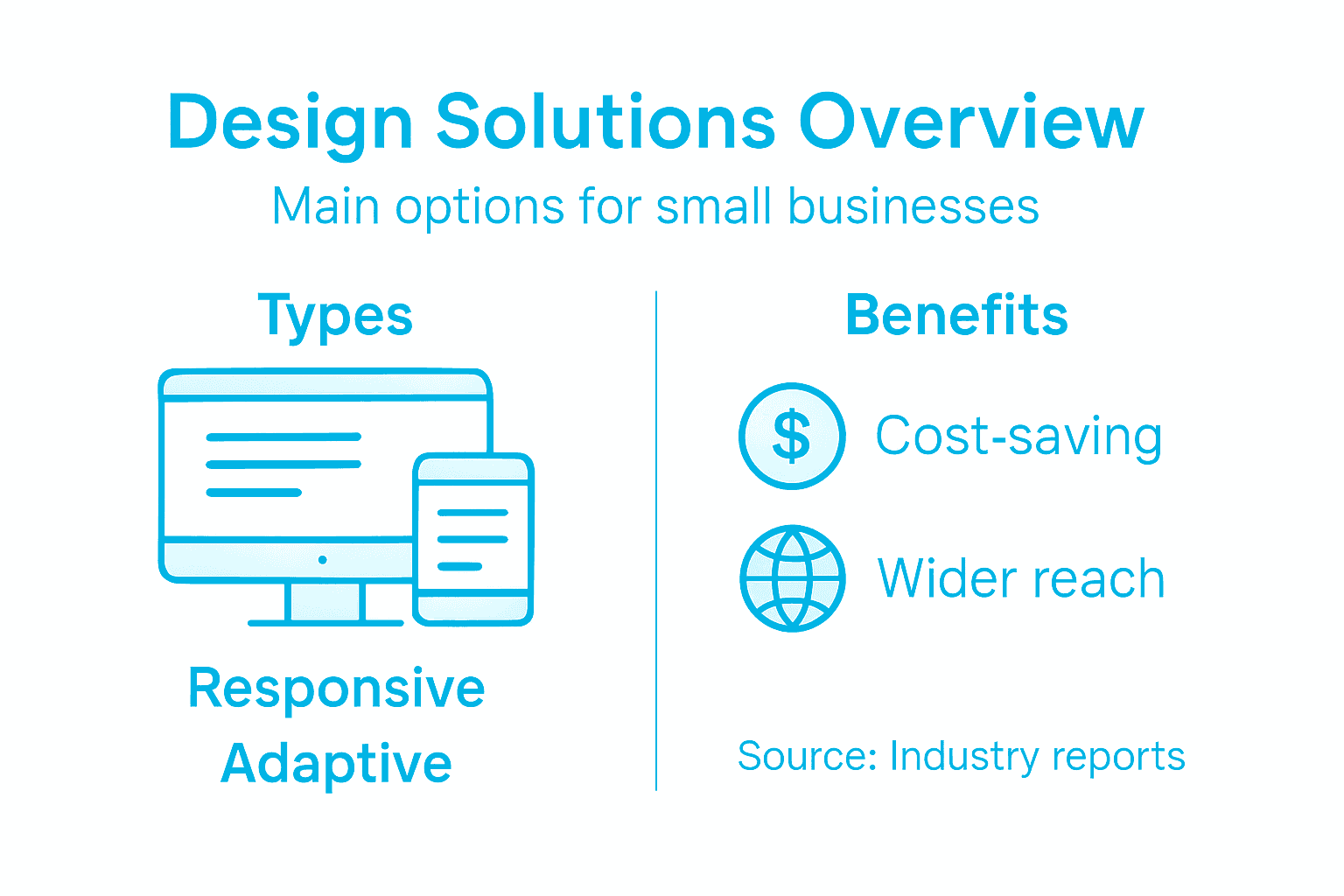
Each web design solution offers distinct benefits for small businesses. RWD provides cost-effectiveness and broad device compatibility, making it ideal for businesses with limited budgets. AWD delivers more personalised user experiences by creating device-specific interfaces. Custom web design solutions enable businesses to stand out through unique visual storytelling and advanced functionality that generic templates cannot match. The selection depends on factors like target audience, budget, technical requirements, and specific business objectives.
Here’s a comparison of key professional web design solutions and their strategic advantages for small businesses:
Solution Type | Distinctive Benefit | Ideal For | Technical Consideration |
|---|---|---|---|
Responsive Web Design | Seamless device adaptability | Small budgets, wide reach | Requires flexible media queries |
Adaptive Web Design | Device-specific experiences | Highly targeted audiences | Involves multiple layout versions |
Custom Web Design | Unique branding & advanced features | Brand differentiation | May need bespoke development team |
Pro tip: Conduct a thorough audience research to determine which web design approach best matches your target demographic’s technological preferences and browsing habits.
Key Features Driving Customer Engagement
Customer engagement represents the critical cornerstone of successful digital experiences, where professional web design transforms passive website visitors into active participants. Web design strategies fundamentally shape how users interact with digital platforms, influencing their perception, behaviour, and likelihood of conversion. By strategically implementing specific design elements, small businesses can create compelling online environments that captivate and retain audience attention.
The most impactful features driving customer engagement include Crystal Clear Navigation, Interactive Elements, and Persuasive Visual Storytelling. Crystal clear navigation ensures users can seamlessly explore website content, reducing frustration and increasing time spent on site. Interactive elements like hover effects, dynamic forms, and personalised content recommendations encourage active user participation. Visual storytelling leverages compelling graphics, carefully selected colour palettes, and intuitive layout designs to communicate brand personality and emotional resonance.
Website design strategies reveal that technical performance plays an equally crucial role in engagement. Factors such as rapid page loading speeds, mobile responsiveness, readable typography, and strategically placed call-to-action buttons significantly impact user experience. Small businesses must prioritise these technical aspects alongside aesthetic considerations to create holistic digital experiences that not only look appealing but also function smoothly across various devices and user interactions.
Pro tip: Conduct regular user experience testing to identify and eliminate potential friction points in your website design, ensuring a seamless and engaging digital journey for your customers.
How Effective Design Boosts SEO And Trust
Professional web design serves as a critical intersection between visual appeal and search engine performance, where strategic design elements directly influence online visibility and user credibility. Web design and SEO strategies work synergistically to create digital platforms that not only attract visitors but also build lasting trust with potential customers. Small businesses can leverage sophisticated design techniques to simultaneously improve search rankings and establish professional online reputations.
The most significant design factors impacting SEO and trust include Mobile Responsiveness, Page Loading Speed, and Intuitive Navigation. Mobile-friendly designs signal to search engines that a website provides excellent user experiences across devices, while rapid loading times reduce bounce rates and increase engagement metrics. Intuitive navigation structures help users find information quickly, which search algorithms interpret as a positive user experience indicator. Professional typography, consistent colour schemes, and clean layout designs further enhance credibility by presenting a polished, trustworthy digital presence.
Modern SEO design principles emphasise creating holistic digital experiences that prioritise user needs. This means developing websites with clear visual hierarchies, strategically placed call-to-action buttons, and content presentations that guide visitors seamlessly through their information-seeking journey. Search engines increasingly reward websites that demonstrate user-centric design philosophies, recognising that websites providing genuine value and smooth interactions deserve higher search rankings.
Pro tip: Regularly audit your website’s design performance using professional analytics tools to identify and resolve potential user experience barriers that might negatively impact your search engine visibility.
Risks And Costs Of Poor Website Design
Poor website design represents a critical business vulnerability that can dramatically undermine digital success and commercial credibility. Poor website quality creates cascading challenges that extend far beyond aesthetic shortcomings, potentially causing substantial financial and reputational damage to small businesses. These design failures can transform what should be a powerful marketing tool into an expensive liability that actively repels potential customers.

The most significant risks of substandard web design include Visitor Abandonment, Reduced Credibility, and Lost Revenue Opportunities. Websites with cluttered layouts, confusing navigation, and slow loading times immediately signal unprofessionalism, causing visitors to lose trust within seconds. Research indicates that users typically make judgments about a website’s reliability in less than three seconds, meaning poor design can instantaneously eliminate potential customer relationships. Technical issues like broken links, non-responsive mobile interfaces, and inconsistent branding further erode user confidence and push potential clients towards competitors.
Web design impact studies demonstrate that poor design directly correlates with increased operational costs. Businesses with ineffective websites often experience higher customer support demands, increased marketing expenses to compensate for lost conversions, and diminished search engine visibility. These hidden costs can far exceed the initial investment required for professional web design, creating a false economy where attempting to save money actually results in significant long-term financial strain.
The following table summarises the main risks and cost factors associated with poor website design for small businesses:
Risk Factor | Business Impact | Example Scenario |
|---|---|---|
Visitor Abandonment | Loss of potential customers | Users exit within seconds |
Reduced Credibility | Damaged professional reputation | Negative first impressions |
Operational Overheads | Increased support and advertising | Higher spend to overcome failures |
Lost Revenue | Missed sales opportunities | Lower conversion rates |
Pro tip: Invest in an objective, professional website audit that comprehensively evaluates your digital platform’s user experience, identifying potential design barriers before they impact your business performance.
Comparing DIY And Professional Approaches
The choice between do-it-yourself and professional web design represents a critical strategic decision for small businesses navigating the complex digital landscape. While DIY platforms promise affordability and quick setup, they often conceal significant limitations that can undermine a business’s online potential. Website design approaches fundamentally differ in their ability to create compelling, functional digital experiences that truly represent a brand’s unique identity.
The most significant distinctions between DIY and professional web design emerge across several key dimensions. DIY Platforms typically offer template-based solutions with limited customisation, restricted functionality, and generic design elements that struggle to differentiate a business. Professional web designers, by contrast, craft bespoke digital experiences that align precisely with a company’s strategic objectives. They bring advanced technical expertise, understanding of user experience principles, and the ability to create responsive, SEO-optimised designs that adapt seamlessly across different devices and platforms.
Cost considerations extend far beyond initial development expenses. While DIY solutions appear more affordable upfront, they often incur hidden costs through reduced conversion rates, limited scalability, and potential technical limitations. Professional web design represents a strategic investment that delivers measurable returns through enhanced user engagement, improved search engine rankings, and a more sophisticated brand presentation. Small businesses must evaluate not just the immediate expense, but the long-term value of a professionally crafted digital platform that can genuinely support growth and competitive positioning.
Pro tip: Calculate your potential return on investment by comparing your current website’s conversion rates with professionally designed alternatives, considering both direct revenue impact and indirect brand perception benefits.
Elevate Your Small Business with Professional Web Design Solutions
Struggling with visitor abandonment or poor online credibility as highlighted in the article on why professional web design matters to small businesses? You are not alone. Many businesses face challenges such as confusing navigation, slow loading speeds, and lacklustre branding that directly impact customer engagement and SEO performance. These pain points can hold back your growth and reduce your competitive edge in today’s digital marketplace.
At Firefly Digital, we understand these critical issues and offer tailored web design services that combine responsive layouts, intuitive navigation, and SEO optimisation to transform your website into a powerful business asset. Whether you need a fully custom design or want to explore our innovative Ignite Sites platform powered by AI-driven tools, our team works in close collaboration with you to build an appealing and functional digital presence. Discover how our solutions tackle the exact problems identified in the article by visiting Firefly Digital website.
Ready to turn your website into a trusted and engaging platform that drives real results for your small business? Explore our range of services at Firefly Digital website and start your journey towards a seamless digital experience. Don’t let poor design cost you customers – contact us today and take the first step towards a website that truly reflects your brand and supports your business growth. Learn more about how custom web design can impact your bottom line by visiting our landing page.
Frequently Asked Questions
What are the benefits of using professional web design for small businesses?
Professional web design enhances user experience, builds brand credibility, improves search engine visibility, and leads to higher conversion rates. It transforms websites from static pages into powerful customer-engagement tools.
How does professional web design impact SEO?
Professional web design incorporates technical elements like mobile responsiveness, fast loading speeds, and intuitive navigation, all of which are crucial for improving search engine rankings and ensuring a trustworthy online presence.
What distinguishes responsive web design from adaptive web design?
Responsive web design automatically adjusts to different screen sizes for a consistent experience across devices, while adaptive web design creates specific layouts for distinct device types, offering more personalised user experiences.
Why is clear navigation important in web design?
Clear navigation reduces user frustration, helps visitors find information effortlessly, and encourages longer time spent on the site, which ultimately increases the likelihood of conversions and enhances overall user satisfaction.
Recommended
Related articles
Our platform is designed to empower businesses of all sizes to work smarter and achieve their goals with confidence.



Ignite your Firefly journey today!
Whether you seek social media marketing expertise, professional web design, or the perfect SEO strategy for your brand, our mission is to support you in reaching your goals through Web Design, SEO, Social Media Management & More.

Our Services
Subscriptions
Existing Clients