
Innovation
Tuesday, June 11, 2024
Custom website design empowers small businesses with unique branding, device responsiveness, and SEO benefits. Learn key elements, processes, and cost factors.

What Is Custom Website Design and Why It Matters
Most british small businesses struggle to stand out online when over 80 percent of customers judge a brand by its website. A generic template often makes it harder to compete or connect with your target market. Understanding what custom website design truly means can help you find solutions that fit your budget while giving you personal support and a platform that actually reflects your vision.
Table of Contents
Defining Custom Website Design For Businesses
Types Of Website Design: Custom Vs. Template
How Custom Design Supports Branding And Growth
Key Steps In The Custom Design Process
Comparing Costs, Value, And Common Pitfalls
Key Takeaways
Point | Details |
Custom Website Design | Tailored solutions offer complete control over aesthetics, functionality, and user experience, aligning closely with business objectives. |
Strategic Advantages | Custom designs facilitate advanced functionality and scalability, enhancing brand identity and user engagement for better conversion rates. |
Cost Considerations | While custom designs have higher upfront costs, they provide long-term value through flexibility and alignment with unique business needs. |
Project Management | Effective communication and project scoping are crucial to avoid common pitfalls such as scope creep, ensuring successful implementation. |
Defining Custom Website Design for Businesses
A custom website design represents a bespoke digital solution crafted specifically for a business’s unique requirements and strategic objectives. Unlike standard template websites, custom web platforms offer complete control over design, functionality, and user experience. These digital assets are meticulously developed to reflect a company’s brand identity, communicate its core messaging, and provide seamless interactions for potential customers.
Custom website design encompasses far more than aesthetic appeal. The process involves strategic planning, user experience mapping, and technical development tailored to meet specific business goals. Professional designers analyse a company’s target audience, brand personality, and commercial objectives to create a website that not only looks compelling but also drives meaningful engagement and conversions. This approach ensures that every visual element, interactive feature, and content section serves a deliberate purpose in supporting the business’s online strategy.
The development of a custom website typically involves several sophisticated stages. Designers begin with an in-depth discovery phase, understanding the business’s unique requirements, target market, and competitive landscape. This research informs the subsequent planning and design stages, where information architecture, wireframing, and visual design are carefully constructed. Advanced technologies like responsive frameworks, intelligent content management systems, and performance optimisation techniques are integrated to create a robust, scalable digital platform.
Pro tip: When planning a custom website, prioritise user experience and clear conversion pathways over purely aesthetic design elements.
Types of Website Design: Custom vs. Template
Website design fundamentally breaks down into two primary approaches: custom design and template-based design. Website templates represent pre-built frameworks with standardised layouts that enable businesses to launch digital platforms quickly and affordably. These ready-made solutions offer a straightforward entry point for small businesses or startups seeking an immediate online presence without extensive development investment.
In contrast, custom website design provides businesses with a bespoke digital solution meticulously crafted to meet unique operational requirements. Custom web development offers comprehensive control over aesthetic elements, user experience, and functional capabilities. Unlike template designs, custom websites are engineered from the ground up, allowing for precise alignment with a company’s brand identity, strategic objectives, and specific user interaction needs. This approach ensures that every design element serves a deliberate purpose, creating a more engaging and effective online platform.
Comparing these approaches reveals distinct advantages and limitations. Template designs excel in affordability and rapid deployment, typically costing less and requiring minimal technical expertise. However, they often compromise on uniqueness, scalability, and advanced functionality. Custom websites, while initially more expensive and time-consuming, provide unparalleled flexibility, superior performance optimization, and the ability to create truly distinctive digital experiences that differentiate a brand in competitive markets.
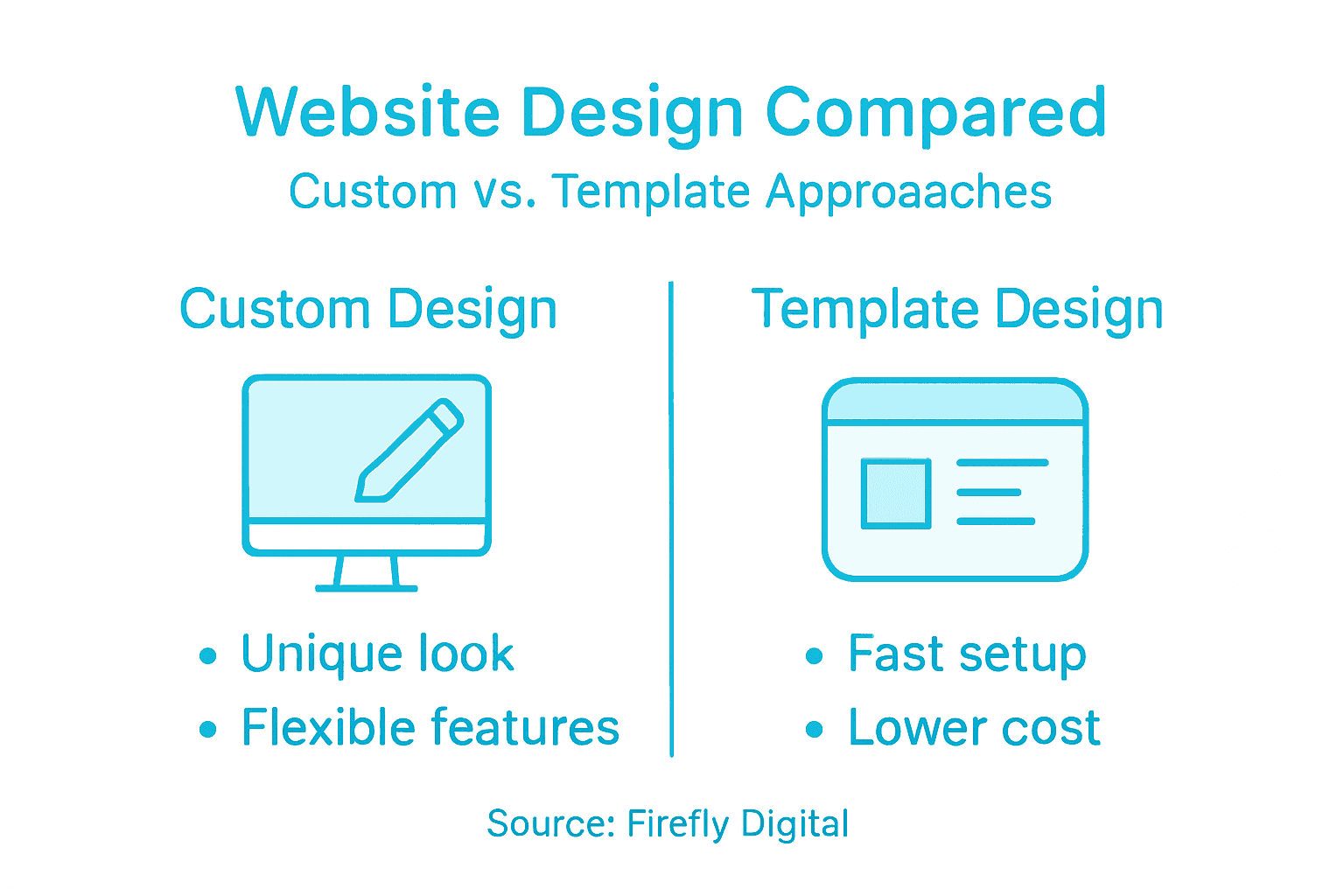
Here’s a concise comparison of custom versus template website design approaches:
Aspect | Custom Design | Template Design |
Initial Cost | Higher investment | Lower upfront cost |
Brand Uniqueness | Fully tailored to business identity | Limited customisation |
Scalability | Built for future growth | Often hard to expand |
User Experience | Optimised for target audience | Standardised interactions |
Pro tip: Evaluate your business’s long-term digital strategy before selecting between template and custom website designs, considering growth potential and specific functionality requirements.
How Custom Design Supports Branding and Growth
Custom website design serves as a strategic digital asset that goes far beyond mere visual aesthetics. Brand identity platforms represent powerful communication tools that enable businesses to craft unique, compelling online experiences tailored precisely to their strategic objectives. By moving beyond generic template limitations, companies can create digital environments that authentically represent their brand’s personality, values, and distinctive market positioning.

The profound impact of custom design extends into critical business growth mechanisms. Unlike standardised templates, a bespoke website allows organisations to integrate advanced functionality, create intuitive user journeys, and develop scalable digital infrastructures that adapt alongside business evolution. This approach enables companies to build trust through consistent visual storytelling, enhance user engagement, and communicate their unique value proposition more effectively across digital platforms.
Brand differentiation emerges as a crucial advantage of custom web design. Distinctive digital experiences provide businesses with the opportunity to stand out in crowded marketplaces, creating memorable interactions that resonate with target audiences. By carefully crafting every design element, from colour palettes to navigation structures, companies can develop digital platforms that not only look remarkable but also strategically guide potential customers through carefully designed conversion pathways.
Pro tip: Invest time in understanding your brand’s core narrative before beginning the custom design process, as this will provide the essential blueprint for your digital strategy.
Key Steps in the Custom Design Process
The custom website design journey begins with a comprehensive research and discovery phase, where designers meticulously explore a business’s core objectives, target audience, and unique brand identity. This initial stage involves deep collaborative discussions, gathering critical insights about the company’s vision, market positioning, and specific digital requirements. Designers conduct thorough competitor analysis, user persona development, and strategic planning to establish a solid foundation for the entire design process.
Following the discovery phase, designers transition into information architecture and wireframing, creating structural blueprints that define the website’s navigation, content hierarchy, and user experience flow. This critical stage involves mapping out precise user journeys, determining how visitors will interact with the site, and ensuring intuitive pathways that guide potential customers towards key conversion points. Wireframes serve as skeletal frameworks, allowing stakeholders to visualise the website’s fundamental structure before investing in detailed visual design elements.
The subsequent visual design stage transforms strategic insights into compelling digital experiences. Designers integrate brand colours, typography, imagery, and interactive elements that authentically represent the company’s personality and strategic messaging. High-fidelity prototypes are developed, allowing for detailed stakeholder review and iterative refinement. This phase requires balancing aesthetic appeal with functional clarity, ensuring that every design element serves a deliberate purpose in supporting the business’s digital objectives and creating meaningful user engagement.
Below is a summary of key stages in the custom website design process and their strategic importance:
Stage | Purpose | Strategic Benefit |
Discovery & Research | Understand business goals | Informs targeted design |
Wireframing | Define structure and flow | Enhances site navigation |
Visual Design | Apply branding and aesthetics | Supports brand messaging |
Pro tip: Maintain open communication channels with your design team throughout the process, providing comprehensive brand insights and being receptive to professional recommendations.
Comparing Costs, Value, and Common Pitfalls
Understanding the financial landscape of website development requires careful evaluation of different approaches and their long-term implications. Custom website development involves significantly higher upfront investments compared to template-based solutions, with costs reflecting the bespoke nature of comprehensive design and development. While initial expenses may seem substantial, custom websites offer unparalleled flexibility, precise brand alignment, and potential for advanced functionality that generic templates cannot match.
The true value of custom web design extends beyond immediate visual appeal, encompassing strategic advantages that directly impact business performance. Professional custom designs provide enhanced user experiences, more robust scalability, and improved conversion potential. By investing in a tailored digital platform, businesses can avoid the limitations of template constraints, creating digital experiences that genuinely reflect their unique brand identity and operational requirements. Professional web design strategies demonstrate that initial higher costs often translate into more sustainable long-term digital assets.
Navigating potential pitfalls requires strategic planning and realistic expectations. Common challenges include scope creep, where project requirements unexpectedly expand, and underestimating ongoing maintenance costs. Businesses must carefully assess their technological needs, budget constraints, and future growth potential. Transparent communication with design professionals, comprehensive project scoping, and maintaining flexibility throughout the development process can help mitigate risks and ensure a successful custom website implementation.
Pro tip: Request detailed project milestones and comprehensive cost breakdowns before committing to a custom web design project, ensuring complete transparency and alignment with your business objectives.
Unlock the Full Potential of Your Business with Custom Website Design
The article highlights how a custom website design is not just about aesthetics but about creating a strategic digital asset tailored to your brand’s identity and growth ambitions. If you are a small or medium-sized business struggling to find a website that truly represents your unique values while offering seamless user experiences, the challenge is real. Key pain points include lack of scalability, limited customisation in template designs, and the need for a site that drives meaningful engagement and conversions.
At Firefly Digital, we understand these challenges deeply. Our UK-based agency specialises in crafting bespoke websites that align perfectly with your business goals and brand personality. Whether you desire a visually appealing, responsive platform or require expert SEO management and ongoing support, we serve as your trusted digital partner. Discover how our innovative Ignite Sites platform can also empower businesses on a budget to build professional websites using AI-driven tools, without compromising quality.
Ready to transform your digital presence with a truly custom website designed to foster growth and brand distinction? Visit our main site at Firefly Digital to explore tailored solutions. Take the first step now with a collaborative, hassle-free process that positions your website as a key business growth engine.
Frequently Asked Questions
What is custom website design?
Custom website design refers to a bespoke digital solution created specifically to meet a business’s unique requirements and strategic objectives. It allows for complete control over design, functionality, and user experience, reflecting a company’s brand identity.
How does custom website design differ from template design?
Custom website design is tailored to a business’s unique needs, offering greater flexibility and advanced functionality. In contrast, template design utilises pre-built frameworks that are quicker and more affordable but often compromise on uniqueness and scalability.
Why is custom website design important for branding?
Custom website design serves as a powerful communication tool, enabling businesses to create unique online experiences that authentically represent their brand’s personality and values, which helps in standing out in competitive markets.
What are the key steps in the custom website design process?
The custom website design process typically involves a research and discovery phase, followed by information architecture and wireframing, and then visual design. Each step is crucial to ensure the website effectively meets business goals and enhances user experience.
Recommended
Related articles
Our platform is designed to empower businesses of all sizes to work smarter and achieve their goals with confidence.


Ignite your Firefly journey today!
Whether you seek social media marketing expertise, professional web design, or the perfect SEO strategy for your brand, our mission is to support you in reaching your goals through Web Design, SEO, Social Media Management & More.

Our Services
Subscriptions
Existing Clients