
Innovation
Tuesday, June 11, 2024
Small business branding builds recognition, customer trust, and loyalty. Learn the elements, branding types, pitfalls to avoid, and essential strategies.

Small Business Branding: Impact on Growth and Trust
Nearly 77 percent of British customers believe a company’s branding impacts their trust and buying choices. For service-based small businesses in the United Kingdom, standing out requires more than a clever logo or polished website. Strong branding connects your business’s personality and values with local customers, helping you become memorable in a competitive market. This guide explores practical strategies that turn everyday customer interactions into powerful branding moments tailored for British entrepreneurs.
Table of Contents
Defining Small Business Branding
Core Elements Of An Effective Brand
Types Of Branding For Small Businesses
How Branding Drives Customer Trust
Common Branding Mistakes To Avoid
Key Takeaways
Point | Details |
|---|---|
Importance of Branding | Branding is essential for small businesses, representing their narrative and perceived value. |
Core Elements Required | Effective branding combines identity, positioning, and messaging to differentiate businesses. |
Trust Building Mechanisms | Consistency in quality and communication is crucial for developing customer trust and loyalty. |
Common Mistakes to Avoid | Small businesses often struggle with inconsistency and unclear messaging, undermining their brand identity. |
Defining Small Business Branding
Branding is not simply a logo or colour scheme - it represents the comprehensive narrative and perceived value of a small business within its marketplace. Strategic branding processes fundamentally distinguish successful small enterprises from their competitors by creating unique emotional connections with customers.
At its core, small business branding encompasses multiple interconnected elements that communicate a company’s personality, values, and professional promise. These include visual identity, communication style, customer experience, and the consistent representation of what makes the business distinctive. Unlike large corporations with extensive marketing budgets, small businesses must craft more nuanced, authentic brand experiences that resonate deeply with their target audience.
Founder identity significantly influences how small businesses develop their brand narrative. The personal stories, values, and vision of business owners often become integral to the brand’s positioning, especially in service-based industries where personal connection matters immensely. This means branding goes beyond aesthetic design - it becomes a strategic tool for communicating trustworthiness, expertise, and unique value proposition.
Pro tip: Conduct a brand audit every six months to ensure your visual and messaging elements consistently reflect your business’s evolving personality and market positioning.
Core Elements of an Effective Brand
Building a powerful brand requires strategic integration of multiple critical components that collectively communicate a business’s unique value proposition. Brand building frameworks emphasise the importance of creating cohesive elements that resonate with target audiences and differentiate the business in competitive markets.

The foundational elements of an effective brand include brand identity, positioning, and messaging. Brand identity encompasses visual components like logos, colour palettes, and typography, while positioning defines the unique space a business occupies in customers’ minds. Messaging represents the verbal and written communication that articulates the brand’s personality, values, and promise. These elements must work harmoniously to create a consistent and compelling narrative that attracts and retains customers.
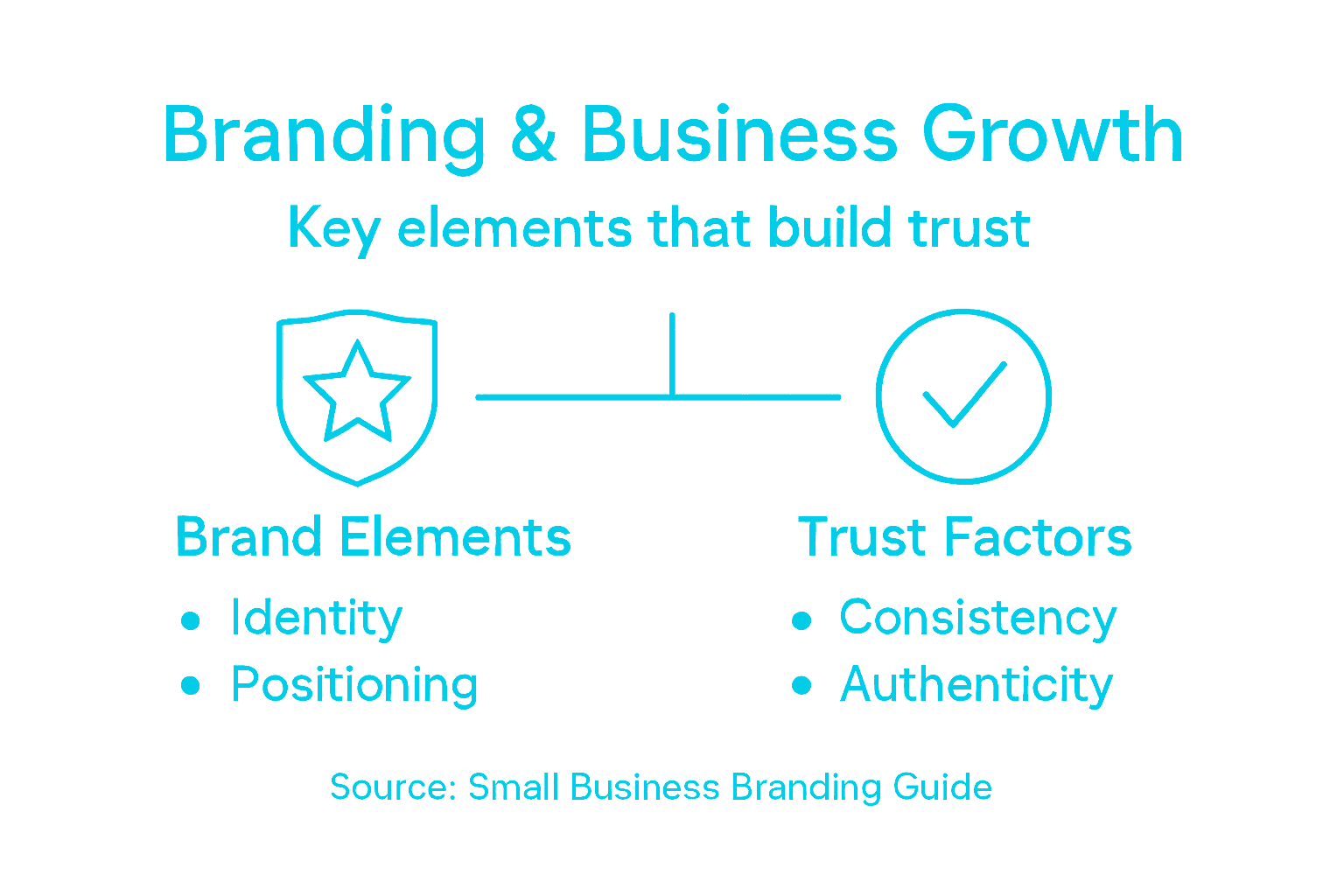
The core components of small business branding each play distinct roles in shaping customer perceptions and market positioning.
Element | Purpose | Impact on Business |
|---|---|---|
Brand Identity | Establishes visual uniqueness | Increases recognition |
Positioning | Defines market role | Clarifies value proposition |
Messaging | Communicates brand personality | Builds trust and loyalty |
Strategic brand positioning requires a clear understanding of the target audience, competitive landscape, and the business’s unique strengths. Small businesses must develop a nuanced approach that goes beyond generic marketing tactics, focusing instead on authentic storytelling and demonstrating genuine value. This involves crafting a compelling brand promise that not only attracts customers but also consistently delivers on expectations across all interaction points.
Pro tip: Create a comprehensive brand guideline document that details your visual identity, tone of voice, and core messaging to ensure consistency across all marketing channels.
Types of Branding for Small Businesses
Small business branding strategies reveal multiple nuanced approaches that enable enterprises to establish distinctive market positions. Unlike large corporations with extensive resources, small businesses must carefully select branding methods that align with their unique capabilities, target audience, and strategic objectives.
The primary types of branding for small businesses include corporate branding, personal branding, product branding, and geographical branding. Corporate branding focuses on developing the overall company reputation, emphasising the organisation’s core values and professional identity. Personal branding involves leveraging the founder’s or key team members’ individual personalities and expertise as a strategic differentiator, particularly effective in service-based industries where trust and individual connections matter significantly.
Diverse branding approaches offer small businesses strategic flexibility in communicating their unique value propositions. Product branding allows businesses to create distinct identities for specific offerings, while geographical branding can help local enterprises connect with community-specific audiences. Each approach requires careful consideration of the business’s strengths, market positioning, and target demographic, ensuring that the chosen branding strategy authentically represents the enterprise’s core identity and resonates with potential customers.
Different branding strategies offer unique advantages for small businesses depending on their goals and target customer base.
Branding Type | Key Strength | Ideal Business Usage |
|---|---|---|
Corporate Branding | Enhances reputation | Broad appeal businesses |
Personal Branding | Builds trust quickly | Service-led enterprises |
Product Branding | Highlights uniqueness | Businesses with varied goods |
Geographical Branding | Fosters local loyalty | Community-focused firms |
Pro tip: Conduct thorough market research to identify which branding type best matches your business model, target audience, and competitive landscape.
How Branding Drives Customer Trust
Consumer trust mechanisms represent a complex psychological process where potential customers evaluate a business’s credibility, reliability, and authentic value proposition. For small businesses, establishing trust becomes a critical differentiator in competitive markets, requiring consistent demonstration of competence, integrity, and genuine commitment to customer satisfaction.
The fundamental elements that contribute to building customer trust involve multiple interconnected factors. These include delivering consistent quality, maintaining transparent communication, showcasing genuine expertise, and demonstrating reliability across all customer interaction points. When small businesses create predictable, positive experiences that align with their brand promises, they gradually build a reputation that transforms casual customers into loyal advocates.
Brand trust evaluation extends beyond mere transactional interactions, encompassing broader perceptions of organisational values, social responsibility, and authentic storytelling. Customers increasingly seek businesses that not only provide excellent products or services but also demonstrate genuine commitment to ethical practices, community engagement, and transparent communication. This holistic approach to trust-building requires small businesses to consistently align their actions with their stated brand values, creating a comprehensive narrative that resonates with their target audience’s expectations and aspirations.
Pro tip: Document and share customer success stories that highlight your brand’s genuine impact, using real testimonials to build credibility and demonstrate tangible value.
Common Branding Mistakes to Avoid
Branding strategy vulnerabilities represent significant challenges that can undermine a small business’s market positioning and growth potential. Understanding these potential pitfalls enables entrepreneurs to proactively develop more robust, authentic brand approaches that effectively communicate their unique value proposition and connect with target audiences.
The most critical branding mistakes small businesses frequently encounter include inconsistent visual identity, unclear messaging, and failure to differentiate from competitors. Many enterprises struggle to maintain a cohesive brand image across various platforms, resulting in confused customer perceptions. This inconsistency can manifest through misaligned colour schemes, varying communication tones, or disconnected visual elements that prevent customers from developing a clear understanding of the business’s core identity and values.
Strategic brand communication errors often stem from a fundamental misunderstanding of target audience needs and expectations. Small businesses frequently make the mistake of adopting generic marketing approaches rather than developing nuanced, targeted messaging that genuinely resonates with their specific customer base. This includes neglecting to articulate a unique selling proposition, failing to demonstrate authentic brand personality, and overlooking the importance of consistent customer experience across all interaction points.
Pro tip: Conduct a comprehensive brand audit every six months, systematically reviewing your visual identity, messaging consistency, and alignment with target audience expectations.
Strengthen Your Small Business Brand with Tailored Digital Solutions
Building a trusted and consistent brand is a key challenge highlighted in the article Small Business Branding Impact on Growth and Trust. Small business owners often struggle with creating clear brand positioning and maintaining cohesive messaging across all customer touchpoints. These hurdles can hinder growth and weaken customer loyalty. Your brand’s identity and trustworthiness deserve to be reflected boldly through your online presence with a website that is visually appealing, responsive, and optimized for your audience.
At Firefly Digital we understand how critical authentic storytelling and consistent visual identity are for small enterprises to differentiate themselves. Our expert team offers comprehensive services from custom website design to search engine optimisation and social media support. With innovative platforms like Ignite Sites we empower businesses even on limited budgets to build a professional and trustworthy digital footprint. Act now and transform your brand promise into exceptional customer experiences supported by ongoing collaboration through our client portals and direct communication.
Ready to elevate your brand and drive business growth with a tailored digital strategy

Discover how Firefly Digital can be your dedicated partner in strengthening your small business branding Visit Firefly Digital today and take the first step towards a striking online presence that builds trust and lasting customer relationships.
Frequently Asked Questions
What is small business branding?
Branding for small businesses goes beyond logos and colour schemes; it encompasses the entire narrative and perceived value of the business. It includes visual identity, communication style, customer experience, and what makes the business unique.
How does branding affect customer trust in small businesses?
Branding impacts customer trust by demonstrating consistency, competence, and authenticity. When a small business aligns its actions with its stated values and delivers positive experiences, it builds a reputation that fosters customer loyalty.
What are some common mistakes to avoid in small business branding?
Common branding mistakes include inconsistent visual identity, unclear messaging, and failing to differentiate from competitors. These pitfalls can confuse customers and undermine the business’s market position.
How can I effectively build my small business brand?
To build your brand effectively, focus on creating cohesive brand identity elements like logos and colour schemes, develop clear messaging that articulates your unique value, and maintain consistent customer experiences that reflect your brand’s promise.
Recommended
Related articles
Our platform is designed to empower businesses of all sizes to work smarter and achieve their goals with confidence.


Ignite your Firefly journey today!
Whether you seek social media marketing expertise, professional web design, or the perfect SEO strategy for your brand, our mission is to support you in reaching your goals through Web Design, SEO, Social Media Management & More.

Our Services
Subscriptions
Existing Clients